
By Himani Yakkundi
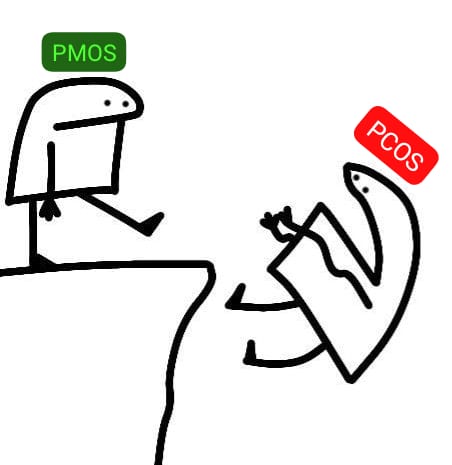
If you are still calling it PCOS, it is time for an update. By global scientific consensus, Polycystic Ovary Syndrome has officially been renamed PMOS: Poly-endocrine Metabolic Ovarian Syndrome.
And honestly? It’s about time.
For decades, the old name misled millions of women into believing they just had a “gynecological issue” or “cysts on their ovaries”. The Lancet formally introduced this shift because the old terminology obscured the true culprit: a complex, multi-system endocrine and metabolic storm. The “ovarian” part is just a downstream symptom; the real engine driving PMOS is systemic metabolic dysfunctionprimarily severe insulin resistance and chronic low-grade inflammation.
As a clinical nutritionist, I see this condition every single day in 8 out of 10. Let’s break down what PMOS actually is, how it secretly starts, and why the standard advice of “just lose weight” is deeply flawed.
It Doesn’t Just Appear: The 10th Standard Domino Effect
A common phrase I hear in the clinic is, *”Himani, my periods were perfectly fine, and suddenly this year my health just collapsed.”*
But science tells us that PMOS doesn’t just show up overnight like a bad cold. It is a slow-burning fuse that we often inadvertently light years before the first missed period or sudden weight surge. Its initiation frequently tracks back to the exact moments we become casual about our health.
Think back to your school days for example : specifically around the 10th standard board exams. What happens?
* Physical education classes are swapped for extra study hours.
* You shift into an intensely sedentary lifestyle, sitting at a desk for 12 to 14 hours a day.
* Stress levels skyrocket, sending cortisol through the roof.
* As for eating Unbalanced it already makes you hungry little after you finished your meal.
* Convenience foods, high-sugar snacks, and stress-eating “gorging” become the default fuel to pull all-nighters.
When we combine prolonged physical inactivity with ultra-processed, high-glycemic foods, and unbalanced eating during critical pubertal transitions, we alter our biology. Research confirms that environmental factors and teenage lifestyle habits act as major epigenetic triggers. You aren’t born destined to suffer from severe metabolic dysfunction, but years of unmanaged stress, zero movement, and poor dietary habits gradually downregulate your peripheral insulin receptor sensitivity. By the time you reach college or your mid-20s, the metabolic bank account is entirely drained, and the clinical symptoms of PMOS fully manifest.
The Pathophysiology: What’s Happening Inside?
To fix it, you have to understand it. When you drop movement and eat a diet dominant in simple sugars and refined fats or even eat unbalanced, your pancreas has to pump out massive amounts of insulin to clear glucose from your blood. Over time, your skeletal muscle and liver cells get tired of the constant shouting and become “insulin resistant”.
Hyperinsulinemia directly stimulates the ovarian theca cells to overproduce androgens like testosterone. At the same time, high insulin suppresses the liver’s production of Sex Hormone-Binding Globulin (SHBG)—the protein meant to tie up excess hormones. Now, you have a flood of free, active testosterone circulating in your system, which halts ovulation, causes cystic ovarian morphology, and triggers acne and facial hair. It is a systemic endocrine failure, not a simple “ovary problem”.
Why the “Weight Loss Obsession” is Failing You
If you have been diagnosed with PMOS, you have likely been told: “Just lose 5 kilos and everything will be fine.”
I fundamentally disagree with this narrow, hyper-fixation on the weighing scale. Chasing generic weight loss usually leads to restrictive, low-calorie crash dieting. When you starve your body, you do lose weight but a massive chunk of that loss can come from precious skeletal muscle mass, not fat.
Losing muscle is the worst thing you can do for PMOS. Skeletal muscle is your primary metabolic sink; it is where more than 70-80% of your post-meal glucose is cleared. If you reduce your muscle mass through starvation diets, you worsen your baseline insulin resistance, lower your metabolic rate, and guarantee that the moment you eat normally again, the weight will return with a vengeance.
Shift the Focus: Fat Loss vs. Muscle Gain
Instead of tracking generic weight loss, we must focus on shifting body composition: maximizing fat loss while actively building or preserving muscle mass.
When we look at Insulin Sensitivity, choosing a lean mass and muscle-focused approach significantly increases your body’s efficiency. More muscle cells mean more “glucose doors” open naturally to clear sugar from your blood without forcing your pancreas to work overtime. On the flip side, a generic weight loss or starvation focus decreases this sensitivity; losing your precious metabolic sinks actively worsens long-term blood sugar handling.
From a Hormonal Feedback perspective, focusing on muscle creation keeps the system balanced, directly helping to clear circulating excess androgens and lowering systemic inflammation. Conversely, restrictive starvation diets leave the body severely stressed. The high cortisol production triggered by extreme restriction signals the ovaries to produce even more total androgens, trapping you in a vicious cycle.
Finally, consider your Basal Metabolic Rate (BMR). Building and maintaining lean muscle elevates your baseline metabolism because muscle tissue is highly active and burns more calories even when you are at absolute rest. In stark contrast, generic calorie crashing suppresses your BMR. Your body reads the starvation mode as a crisis, adaptively slowing down your thyroid and metabolic output to conserve energy, making long-term progress nearly impossible.
Getting the Basics Right: The Clinical Strategy
We do not need over-complicated, expensive supplement regimes or extreme eliminations. We need to do the foundational basics exceptionally well.
1. A Protein-First Approach: Every single meal must contain a high-quality protein source (eggs, lean meats, sprouts, paneer, curd, or a clean whey/plant isolate without maltodextrin or artificial syrups). Protein stabilizes the post-prandial (post-meal) blood glucose spike, preventing the sharp insulin surges that irritate ovarian tissue.
2. Prioritize Strength Training: Resistance exercise forces your muscles to absorb glucose directly from your bloodstream *without* even needing insulin. This directly bypasses insulin resistance.
And as my Mentor says, what is Uterus, it’s a muscle right? So yes, strengthen it!
3. Consistent Lifestyle Non-Negotiables: A daily walking routine (aiming for consistent steps), managing circadian rhythms, and getting 7-8 hours of deep sleep to lower the chronic low-grade inflammation that damages metabolic health.
Mentor’s Note – Amita Gadre
From my mentor, Amita Gadre:
“Himani, when you talk to your clients, remember that we aren’t just ‘fixing’ a hormone; we are supporting a human. This article does a great job of highlighting that lifestyle intervention is first-line therapy (Gadiraju et al., 2025). Be it PCOS or PMOS- Your focus on the ‘Basics’: fiber, protein, and over all balance in diet and the most importantly the strength training is exactly what the the Evidence-Based Guidelines recommend. Stay firm on the science: weight loss is a potential side effect of health, not the primary goal. Keep advocating for that balanced plate and fatloss!”
The Takeaway
PMOS is not a life sentence, nor is it a structural failure of your ovaries. It is a reflection of systemic endocrine and metabolic signaling that went off track when lifestyle parameters became casual. Stop fighting the scale. Focus on nourishing your body with balanced nutrition, prioritizing protein, building functional muscle tissue, and executing the unglamorous basics day in and day out.
Change your mindset and your body will happily follow you!!
Leave a Reply